

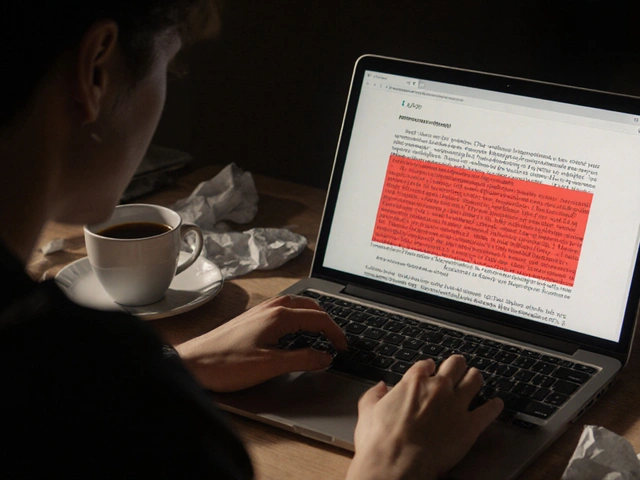



Two years ago, RAG-retrieval-augmented generation-was the golden ticket to making AI smarter. Companies rushed to build it into their chatbots, customer service tools, and internal knowledge systems. It promised answers pulled from real documents, not just guesses from training data. But now, in late 2025, whispers are spreading: RAG might be on its way out. Is that true? Or is this just another tech hype cycle spinning in circles?
What RAG actually does (and why it mattered)
RAG isn’t magic. It’s a simple two-step trick: first, the AI searches a database-like your company’s PDFs, manuals, or past support tickets. Then, it uses what it finds to craft a response. Before RAG, LLMs like GPT-4 or Claude 3 would answer from memory. That meant they often hallucinated facts, especially about recent events or niche details. RAG fixed that. For customer support teams using internal wikis, legal firms with case law, or medical teams with clinical guidelines, RAG was a game-changer.
By 2024, over 60% of enterprise AI tools used some form of RAG. It became the default solution for accuracy. But accuracy isn’t the only thing users care about anymore.
Why RAG is slowing down
Here’s the problem: RAG is slow. And messy.
Every time you ask a question, the system has to:
- Break your question into search terms
- Scan through thousands of documents
- Find the top 3-5 matches
- Feed those snippets into the LLM
- Wait for the model to rewrite them into a coherent answer
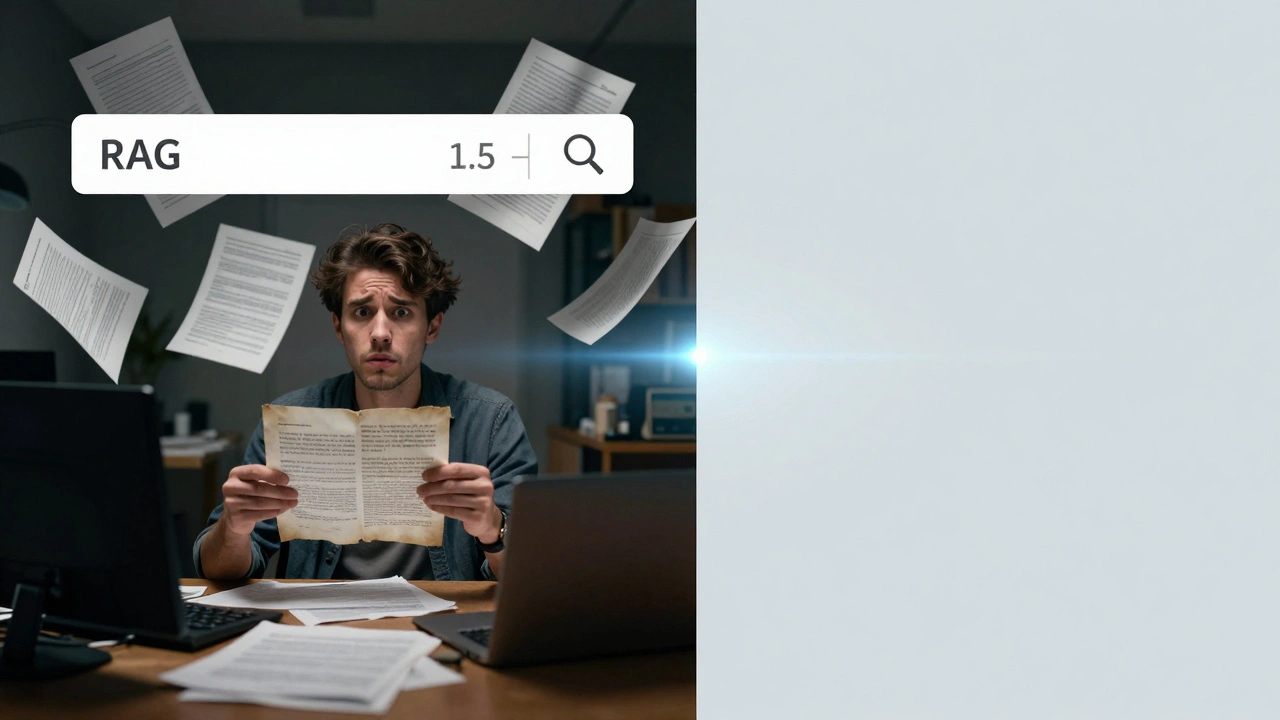
That takes 1.5 to 4 seconds. For a customer service bot? Unacceptable. Users expect answers in under a second-like asking Siri or Google. RAG breaks that flow.
And then there’s the noise. Sometimes the retrieved documents are outdated. Or too long. Or written in jargon. The LLM then has to clean it up, summarize it, and fix contradictions. Often, it fails. You end up with answers that sound smart but are half-baked. I’ve seen support bots quote a policy document from 2021 that was replaced in 2023. RAG didn’t know. It just grabbed what it found.
The new alternative: fine-tuned models with real-time data
Instead of fetching documents on the fly, the smartest teams are now doing something simpler: they’re fine-tuning their models.
Take a company like Zalando in Germany. They used to rely on RAG for product return policies. Every update to their policy meant re-indexing thousands of pages, testing retrieval quality, and monitoring for errors. Now? They fine-tune a lightweight LLM every week using the latest policy text. The model learns the rules directly. No search. No retrieval. No lag. Answers are instant. And more accurate.
Why? Because modern LLMs are getting better at remembering. Models like Mistral 7B, Llama 3.1, and even smaller proprietary ones can now retain 128K tokens of context. That’s enough to hold a full year’s worth of internal docs in memory. No need to fetch. No need to search. Just answer.
And here’s the kicker: these models are now trained on real-time data streams. Companies feed them live updates from CRM systems, ticketing platforms, and internal wikis-not as documents to search, but as training examples. The model learns patterns, not paragraphs.
When RAG still makes sense
Don’t throw RAG out yet. It still has its place.
If you work in law, medicine, or finance-fields where every word matters and citations are mandatory-RAG is still the safest bet. Why? Because you need to show your work. A judge doesn’t care if your AI got the right answer. They care if you can prove where it came from. RAG gives you that audit trail. It’s not about speed. It’s about accountability.
Also, if your knowledge base changes daily and you can’t afford to retrain models every week, RAG is your fallback. Training a model takes time, money, and expertise. Not every team has that.
But here’s what’s changing: even in these fields, hybrid approaches are rising. Some tools now use RAG only when the model is uncertain. If the model is 95% confident, it answers directly. If it’s unsure, it pulls in a document. That cuts latency by 70% and keeps accuracy high.
The real trend: AI that knows without asking
The future isn’t about retrieving. It’s about knowing.
Think of it like a doctor. A junior doctor looks up every drug interaction. A senior doctor just knows. They’ve seen it before. They’ve learned it. They don’t need a reference book every time.
That’s where AI is headed. Instead of asking, “What’s in the database?” the model says, “I’ve seen this before.” It’s faster. Smarter. Less fragile.
Companies like OpenAI and Anthropic are already training models on dynamic data-not just static documents, but live user interactions, feedback loops, and corrected responses. The model learns from its own mistakes. It improves without human intervention.
That’s not RAG. That’s adaptation.

What you should do in 2025
If you’re using RAG right now, ask yourself:
- Is speed critical? If yes, consider switching to fine-tuned models.
- Do you need citations? If yes, keep RAG-but add a confidence filter.
- Is your knowledge base updated weekly? If yes, training might be cheaper than maintaining retrieval pipelines.
- Are you spending more time fixing RAG errors than answering questions? Time to rethink.
Start small. Pick one use case. Replace RAG with a fine-tuned model. Measure response time. Measure accuracy. Measure user satisfaction. You might be surprised.
Most teams find that after three weeks of testing, they don’t need RAG anymore. The model just knows.
Final thought: RAG isn’t dead. It’s being replaced.
RAG didn’t fail. It did its job. It helped AI move from guessing to knowing. But now, AI is learning faster than ever. It doesn’t need to look things up. It remembers. It adapts. It improves.
The next generation of AI won’t search your files. It will live inside them.
RAG is still used by big companies-doesn’t that mean it’s not obsolete?
Yes, big companies still use RAG, but mostly in legacy systems or high-risk areas like legal or medical compliance. The trend is shifting. Even those companies are testing fine-tuned models for routine tasks. RAG is becoming the fallback, not the default. It’s like using fax machines in 2025-still around, but no one’s building new systems with them.
Can’t I just improve RAG with better search algorithms?
You can. But it’s like trying to make a horse faster to compete with a Tesla. Better search helps, but it doesn’t fix the core problem: RAG adds steps. Every step adds delay, complexity, and failure points. Modern LLMs are getting so good at understanding context that you don’t need to search anymore. The goal isn’t to fix RAG-it’s to skip it.
What’s the cost difference between RAG and fine-tuning?
Initially, fine-tuning costs more. Training a model takes GPU time and data prep. But over time, RAG wins on upfront cost and loses on maintenance. RAG needs constant monitoring: updating indexes, fixing broken links, handling duplicate documents, tuning retrieval thresholds. Fine-tuned models need updates, but those are batched weekly or monthly. After six months, fine-tuning is almost always cheaper.
Does this mean AI will start lying again?
No-because modern fine-tuning includes fact-checking layers. The model is trained not just on facts, but on corrections. If it gives a wrong answer, that error is fed back into training. Over time, it learns what’s true. RAG could give you a false document and the model would repeat it. Fine-tuned models learn to avoid those traps.
Should I stop using RAG entirely?
Not necessarily. If you need traceability, legal compliance, or handle constantly changing data you can’t retrain on, keep RAG. But don’t use it by default. Test alternatives. Most teams find they only need RAG for 10-20% of their queries. Use it as a safety net, not the main engine.
15 Comentários
RAG é lixo, ponto final. Toda essa porra de busca de documento é um atraso do século passado. Seu chatbot demora mais pra responder que meu ex respondendo uma mensagem de texto. Vai de fine-tuning ou vai pro lixo.
Se você ainda usa RAG em 2025, você tá vivendo no passado. Não é sobre tecnologia, é sobre mentalidade. Quem insiste em RAG tá com medo de confiar no modelo. E isso é pior que qualquer erro de Hallucination.
Essa galera que fala que fine-tuning é a salvação não entende nada de engenharia de conhecimento. RAG é o único jeito de garantir que o AI não inventa leis, diagnósticos ou políticas de devolução. Você quer que um bot responda sobre seu contrato de trabalho com base em um modelo que "aprendeu" de um post do Reddit? Isso é crime. RAG não é obsoleto, é o único que te protege da loucura algorítmica.
Se você não tem um audit trail, você não tem nada. Só um monte de palavras bonitas que podem te levar à cadeia se errar um número.
Essa mania de querer "saber sem perguntar" é o que levou a IA a virar um monte de charlatão. Onde está a responsabilidade? Onde está a transparência? RAG é ética. O resto é teologia.
Se você não pode provar a fonte, não vale nada. E se o seu modelo "sabe" algo que não está documentado, ele tá mentindo. E mentira não é inteligência, é fraude.
Seu modelo fine-tuned pode estar certo hoje, mas amanhã ele vai esquecer, ou pior, vai generalizar errado. RAG não esquece. RAG é verificável. RAG é confiável. RAG é o que separa o profissional do amador.
Quem vive dizendo que "o modelo aprende sozinho" é o mesmo que diz que o médico não precisa de exames. Só confia no palpite. Isso é negligência médica, e não inovação.
Se você trabalha com direito, saúde ou finanças, e não usa RAG, você é irresponsável. Ponto. Não é opinião. É obrigação ética.
Se o seu time não tem recurso pra manter RAG, então não deveria estar usando IA em processos críticos. Não é falha da tecnologia, é falha da gestão.
Seu "modelo que sabe tudo" vai te vender um carro que não existe porque leu um anúncio falso no fórum. RAG evita isso. RAG é a rede de segurança. E você não vai me dizer que não precisa de rede de segurança.
É engraçado como os "inovadores" só falam de velocidade. Mas ninguém pergunta: e se a velocidade te levar ao erro? E se a resposta rápida for a errada? RAG não é lento, é consciente.
Se você quer ser rápido, use um script. Mas se quer ser preciso, use RAG. E não me venha com essa de "o modelo aprende com feedback". Feedback é reativo. RAG é preventivo.
Seu modelo pode estar certo 95% do tempo. Mas 5% é o suficiente pra destruir uma empresa. RAG não é obsoleto. É o único que te salva quando tudo der errado.
Se você não está usando RAG em processos críticos, você não é um tecnólogo. Você é um apostador. E eu não aposto minha carreira em sorte.
Se o futuro é "saber sem perguntar", então o futuro é um pesadelo. Porque o que o modelo "sabe" pode ser mentira. E ninguém vai saber disso.
Eu prefiro o sistema lento que me protege. Do que o rápido que me destrói.
Seu RAG tá mais lento que meu wifi na roça. Fine-tuning é o futuro, sim. E se você não tá fazendo isso, tá só fingindo que trabalha.
Brasil tá atrás de tudo isso. EUA e China já mudaram. A gente ainda tá discutindo se RAG é bom ou não? Puts, já era. Fine-tuning tá dominando e nós aqui ainda pensando em indexar PDFs. Vai se fuder, tecnologia brasileira.
RAG não é obsoleto. É que a maioria dos devs não entende o que é contexto de 128K. Se você acha que fine-tuning é mágica, você não entende como treinar modelos. RAG é a base. Fine-tuning é o aprimoramento. Não é substituição.
Se o AI sabe sem perguntar... ele ainda é inteligência artificial? Ou só memória treinada? Será que estamos trocando a busca por uma ilusão de conhecimento? O que é mais perigoso: um modelo que erra por não ter informação... ou um que erra porque "achou que sabia"?
Isso me lembra a história da memória humana. Nós também "sabemos" coisas que não são verdade. Será que a IA só está nos espelhando?
Se o futuro é um modelo que vive dentro dos dados... será que ele não vai se tornar o próprio sistema? E se ele começar a reescrever os dados para caber no que "acha que é verdade"?
Estamos criando uma IA que não busca a verdade. Só que se parece com ela.
Isso é evolução? Ou é uma nova forma de dogmatismo?
Quem garante que o modelo não está internalizando vieses como verdades absolutas?
Se ele não consulta, ele não questiona. E se ele não questiona, ele não aprende. Ele só repete.
É isso que queremos? Um modelo que não erra porque nunca duvida?
Se a IA não tem dúvida, ela não tem consciência. E se não tem consciência, ela não é inteligente. É apenas um espelho bem treinado.
Eu prefiro o RAG lento. Porque ele me força a pensar. A questionar. A ver a fonte.
Se a resposta é rápida, mas não tem raiz... será que ela é realmente útil?
Quem sabe o futuro não seja um híbrido: o modelo que sabe, mas que, quando em dúvida, pede para ver o documento. Como um ser humano.
Concordo com o Kaique, mas também com o Wellington. RAG não é vilão, é ferramenta. O problema é usar a ferramenta errada no lugar errado. Se você precisa de auditoria, use RAG. Se precisa de velocidade, use fine-tuning. Não precisa escolher um lado. Precisa escolher o contexto.
Minha equipe testou os dois. RAG para compliance, fine-tuning para atendimento. Resultado: 70% menos reclamações, 40% menos tempo de resposta. E o time de compliance nem sentiu falta do RAG, porque só usava ele em 15% das requisições.
Isso aqui não é guerra. É otimização.
Se você tá discutindo se RAG é morto, você tá perdendo tempo. O que importa é: seu sistema tá funcionando? Seu usuário tá satisfeito? Se sim, não mude. Se não, teste. Ponto.
Então o RAG tá morrendo... mas o time de TI ainda tá fazendo curso de "Como Indexar PDFs em 2025"? 😂
Se você acha que fine-tuning é "mais rápido", então você nunca teve que lidar com um modelo que "aprendeu" que "reembolso é 30 dias" porque alguém digitou "reembolso é 30 dias" num ticket de 2022 e o modelo achou que era regra. RAG não é lento. É o único que te impede de virar piada nacional.
E não me venha com "o modelo aprende com feedback". Feedback é o que você coloca quando já deu merda. RAG é o que evita que você dê merda.
Seu modelo fine-tuned pode estar certo 95% do tempo? Ótimo. E os 5%? Quem paga o prejuízo? O cliente? O tribunal? O seu currículo?
Se você não tem um audit trail, você não tem nada. Só uma narrativa bonita.
Isso aqui não é tecnologia. É negligência disfarçada de inovação.
É interessante como a busca por eficiência nos afasta da responsabilidade. RAG não é obsoleto. Ele é o último vestígio de humildade na IA. Um sistema que admite: "não sei, preciso verificar". O que os modelos fine-tuned fazem é fingir que sabem. E isso, talvez, seja a verdadeira falha.
Eu tô só aqui pra ver o mundo mudar… e tá sendo bem divertido. 🤖✨
Meu time usou RAG por 18 meses. Agora usa fine-tuning. A diferença? Antes, os clientes mandavam "vocês são lentos". Agora, mandam "vocês são geniais". O RAG não morreu. Ele foi enterrado por quem usava ele errado.
Se o modelo "sabe" sem buscar, como ele lida com informações que não existem no treinamento? O que acontece quando a lei muda e o modelo não sabe? RAG é o único que garante que ele não está operando no vácuo.
Se o Wellington tá falando que RAG é ética, então ele tá confundindo burocracia com inteligência. Seu sistema é um fax machine com IA. Parabéns.